What is Construction Safety Software? An Introductory Guide
Recent years have seen a surge in technological management tools aiming to revolutionize the way companies approach construction site safety.
A pivotal advance in this domain is construction safety management software, a digital ally that empowers safety managers and construction leaders to instill best practices while harnessing the power of data to pre-empt and prevent potential hazards.
This blog post will not only explore what construction safety software is but also offer insights into the pressing need for these safety tools, the myriad benefits they offer, and how to pick the right safety software for your construction firm.
The Need for Safety Software in Construction
The construction jobsite has long been synonymous with danger, given project complexities, the nature of heavy machinery, and multiple personnel carrying out varied tasks in a dynamic environment. Despite stringent safety regulations and ongoing training, the industry has continued to witness accidents that are often preventable.
Traditional safety management systems were often paper-based and could not keep pace with the fast-evolving job sites, where instant communication and real-time monitoring are crucial. Safety inspections and reports, though carried out meticulously, were occasionally delayed, leading to responsiveness issues and sometimes a failure to identify red flags early enough.
Construction safety software is the answer to these persistent challenges. With a robust digital platform, companies are able to create safer work environments by centralizing safety data, simplifying compliance with regulations, and fostering a culture of proactive hazard identification and mitigation.
What is Construction Safety Software?
At its core, construction safety software is a suite of digital tools designed to mitigate risk, streamline safety procedures, and promote a collaborative approach to managing the safety of construction projects. This software encompasses a variety of features that optimally function together to elevate safety standards.
Core features typically include incident reporting, safety training and certification tracking, real-time data sharing and communication, safety audit and inspection scheduling, and trend analysis to forecast and forestall future safety risks.
Cloud-based solutions provide accessibility from anywhere, ensuring that site managers, field workers, and leadership teams all have the visibility and accessibility to tools and information needed to assure a safe working environment. Scalability and integration with existing project management software make it a seamless addition to the construction tech stack.
Benefits of Construction Safety Software
Adopting management software solutions is not merely about checking a compliance box; it’s about fundamentally improving the safety culture within an organization. The benefits are multifold, extending to the morale of the workforce and the bottom line of the company.
Proactive Safety Management: By harnessing the power of real-time data and analytics, construction companies can move from a reactive to a proactive safety approach. Early identification of trends and hazards allows for timely corrective actions, preventing accidents before they occur.
Agile Communication: One of the standout benefits is the instantaneous and thorough communication it fosters. Whether it’s alerting the entire team about an immediate danger, conducting safety training online, or ensuring that all necessary protocols are in place for a specific task, construction safety software ensures that no communication breakdown results in oversight with potentially dire consequences.
Regulatory Compliance Simplified: Keeping track of evolving safety regulations can be quite a headache. Safety software eases this burden by updating systems in real time, and by automatically flagging non-compliance issues, ensuring that the company’s procedures are always aligned with the latest mandates.
Choosing the Right Safety Software
With the growing market for construction safety software, it’s important to identify the tool that best aligns with the unique needs and workflows of your construction business. Here are some key points to consider:
Tailored Features: It is crucial to assess the features of different safety software solutions and determine whether the capabilities match the specific safety needs of your projects and company size.
User-Friendly Interface: The software must be intuitive and simple for all members of the team to adopt. Complicated user interfaces can often discourage usage at crucial moments.
Vendor’s Credibility: Research the vendor’s reputation and track record. A trusted supplier should offer not just a software solution, but also support, regular updates, and a clear roadmap for future features that can improve your safety protocols even further.
Seamless Implementation: The transition to safety software should be smooth. Look for a vendor that offers support for setup, training, and troubleshooting as part of their service package.
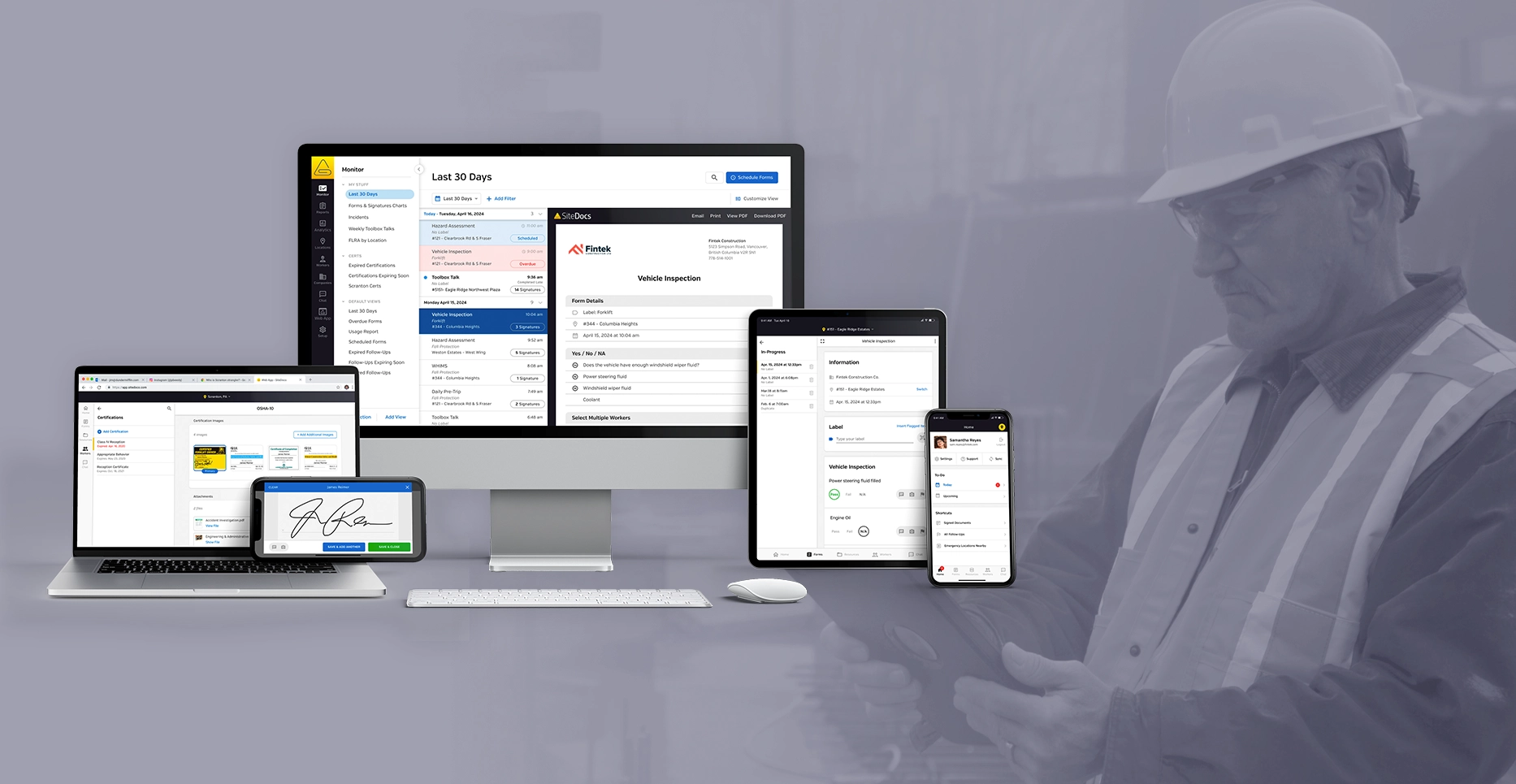
SiteDocs is the premier choice for construction safety software, setting the gold standard in easing the burden of safety management with its innovative and user-friendly platform. With our comprehensive approach to construction safety, SiteDocs offers an extensive suite of features including digital signature capture, Advanced Analytics and Automations, Contractor Management, easy-to-use mobile apps for both iOS and Android, dynamic form customization, and much more. This enables construction firms to not only maintain but elevate their safety compliance and reporting processes.
With SiteDocs, companies can confidently streamline their safety protocols, making it an essential tool in creating a safer and more efficient construction work environment.
Want to learn more about SiteDocs? Visit our features page today.
Frequently Asked Questions
Construction safety software is a digital platform that helps construction companies manage jobsite safety through tools like incident reporting, inspections, training management, and compliance tracking. It replaces paper-based systems with real-time digital solutions that improve communication, prevent accidents, and ensure workers follow proper safety standards. Most platforms are cloud-based, allowing teams to access safety information from any device or location.
Construction companies need safety software because it centralizes safety data, reduces accidents, and keeps projects compliant with regulations. Traditional paper-based systems can’t keep up with the pace of modern construction, where quick communication and instant updates are critical. By digitizing safety management, teams can identify hazards early, respond faster to risks, and maintain consistent safety practices across all job sites.
The main benefits of construction safety software include better communication, proactive hazard management, easier compliance tracking, and improved workforce morale. These systems allow managers to monitor safety metrics in real time, predict potential risks, and ensure every worker has access to the latest safety information. Over time, this leads to fewer incidents, higher productivity, and stronger company-wide safety culture.
Choosing the right construction safety software starts with identifying your company’s specific safety needs and workflows. Look for features like digital inspections, mobile access, analytics, and contractor management. A user-friendly interface and reliable customer support are also critical. Always evaluate the vendor’s reputation, product scalability, and ease of implementation to ensure the software fits your long-term safety goals.
SiteDocs stands out because it combines powerful safety management tools with an intuitive, mobile-friendly design. It offers digital forms, contractor management, advanced analytics, automation, and real-time reporting—all accessible from any device. SiteDocs also provides ongoing updates and customer support, helping construction companies strengthen compliance, reduce administrative work, and create safer worksites with greater efficiency.
SiteDocs is widely recognized for its impact on field safety management. The software helps crews complete inspections faster, submit incident reports immediately, and access up-to-date safety procedures right from their phones. Managers gain full visibility into safety performance and can address issues before they become serious. Its user-friendly design and automation tools make it a top choice for improving safety culture and compliance across multiple projects.
Read More
What Is MRO Management? Why Maintenance Matters for Safety
Learn how MRO management helps ensure jobsite safety, equipment reliability, and compliance. Prevent downtime and improve operational efficiency.

Management of Change: A Simple Safety Guide
Learn about the management of change (MOC) process and how to implement it effectively. Discover how safety management software can enhance MOC.

Verification of Competency: How to Ensure Worker Skills
Learn about verification of competency (VOC), its importance in the workplace, how to implement it effectively, and tools and future trends in VOC.